Kids + Teens
Kids Bedroom Paint Ideas + Room Colors for Every Age
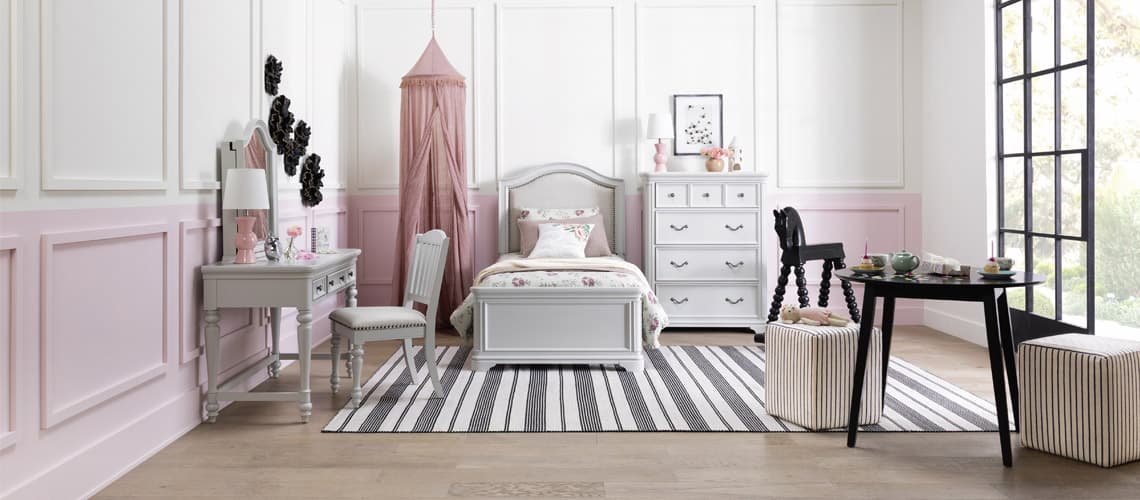
A place to rest, relax, play, and dream, your child's room is a place where they'll spend a great deal of their formative years. The furniture inside it may change – a crib, a bunk bed, and eventually a "real" bed, for example – but the walls are likely to stay the same. That's why the right choice in kids bedroom paint or wall decor early on can make your child's room versatile at any age. Here are ten easy ideas to transform their space into one they'll love to linger in, even when it isn't rainy outside.
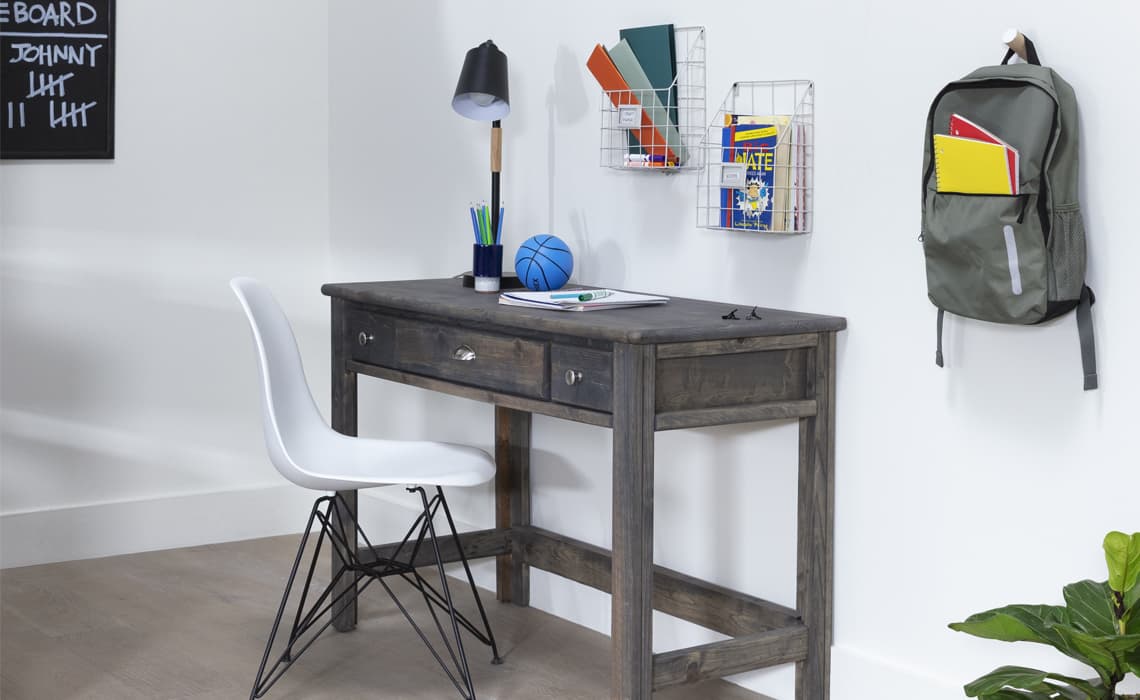
1. Fresh White Painted Walls
Classic and bright, this contrast color makes even small rooms and nurseries feel larger. This wall treatment also gives parents the most flexibility with room decor later; swapping out a few picture frames or posters, for example, will turn a "kids room" into one that a pre-teen will be proud of.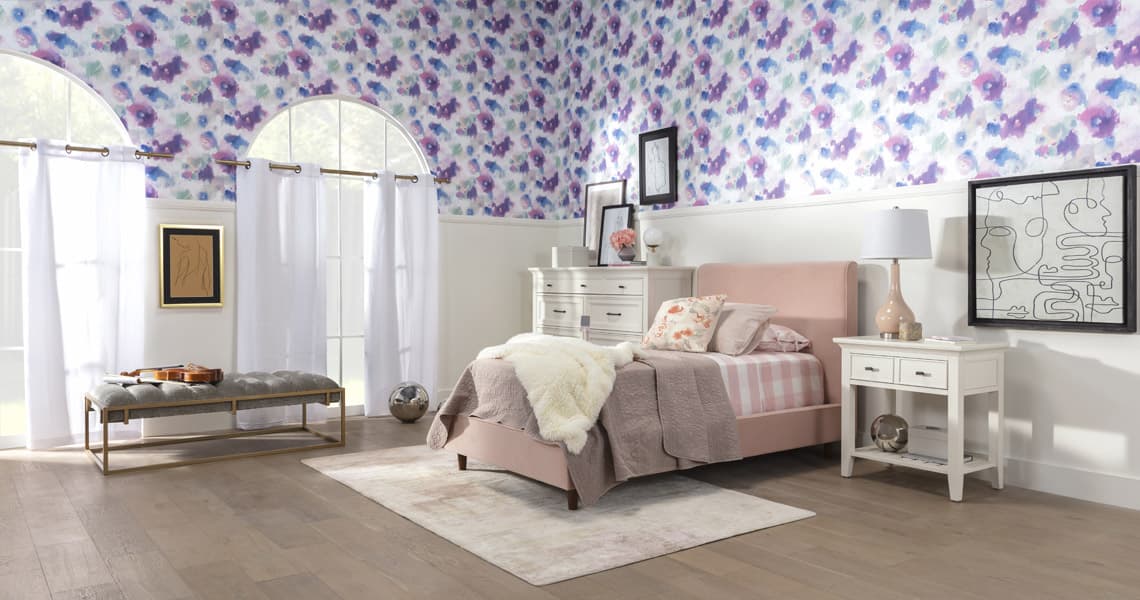
2. Half Wallpaper, Half Painted Walls
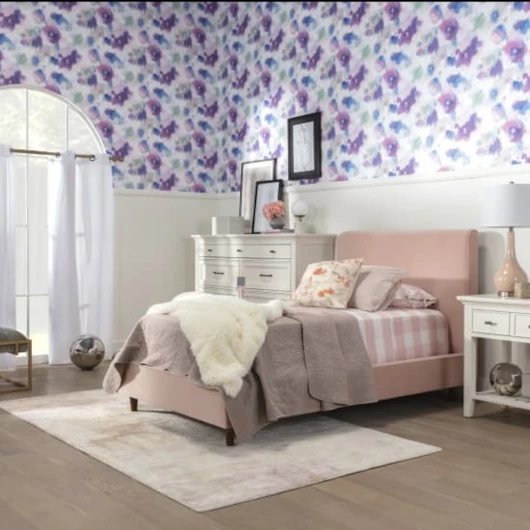
A classic trick for "fooling the eye", using wallpaper to block out the top half of a wall draws the gaze upwards, making the ceilings appear higher. This approach also takes half the work out of wallpapering or painting, and varies up the look of a wall to make it interesting and textural.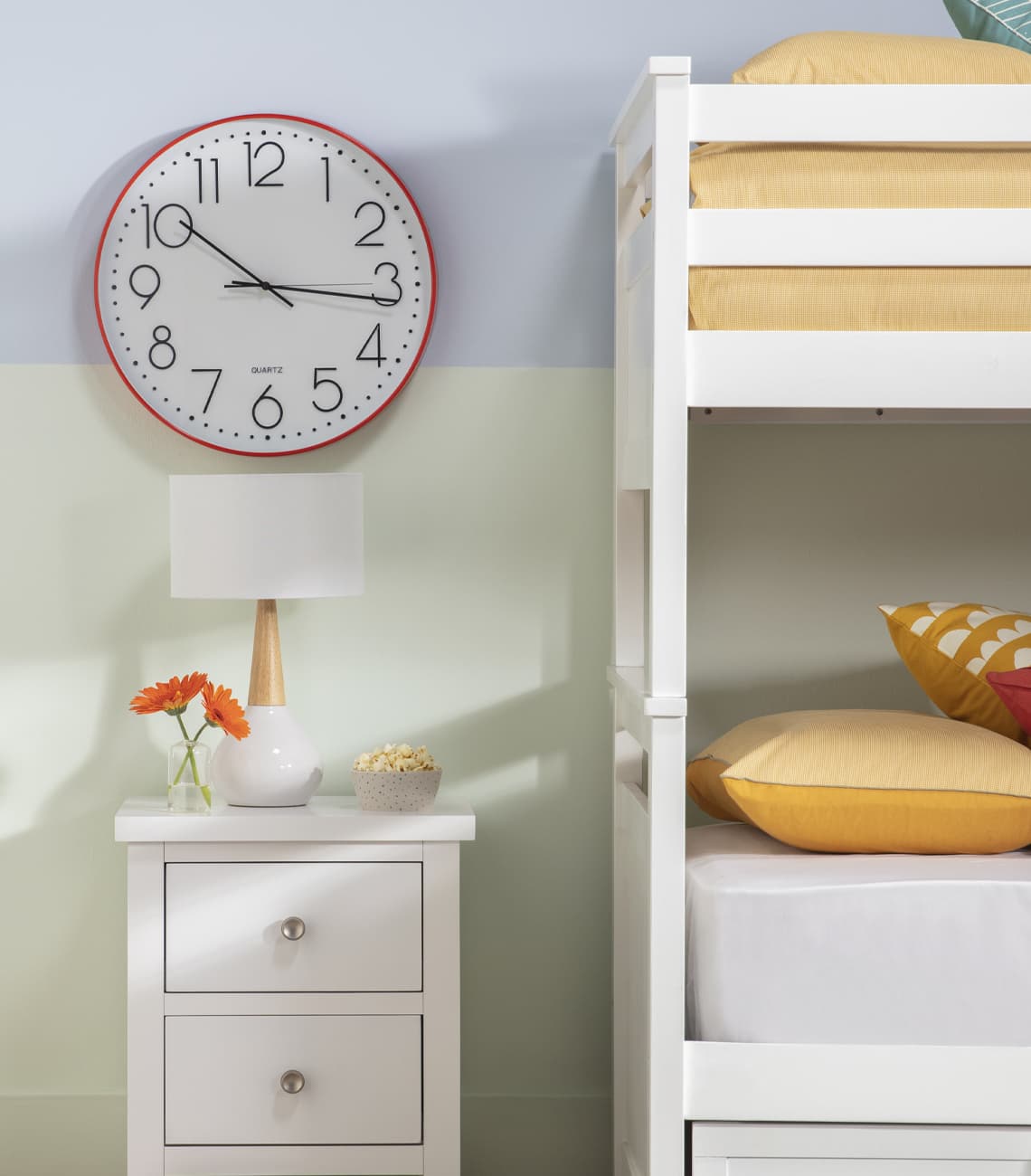
3. Color Blocked Walls
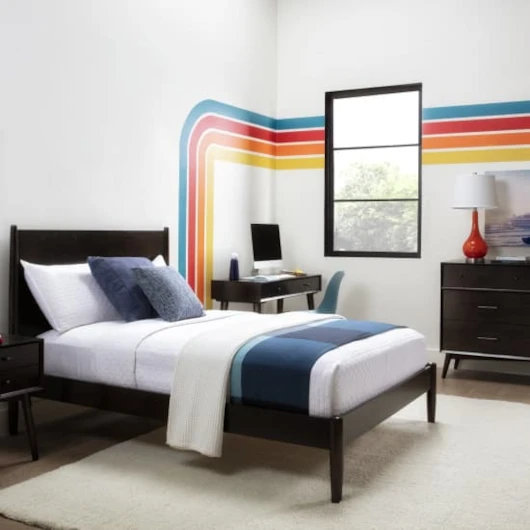
Bold and eye-catching, color blocked paint turns a wall into a simple background palette into a work of art. Especially suited to children's rooms, this painting technique can be used with bright, primary colors like reds, yellows, and blues to inspire young minds and add a playful element. Color blocking can be strictly two-color top-and-bottom treatment, or can be striped (painter's tape comes in handy) or stenciled in for interesting contrast.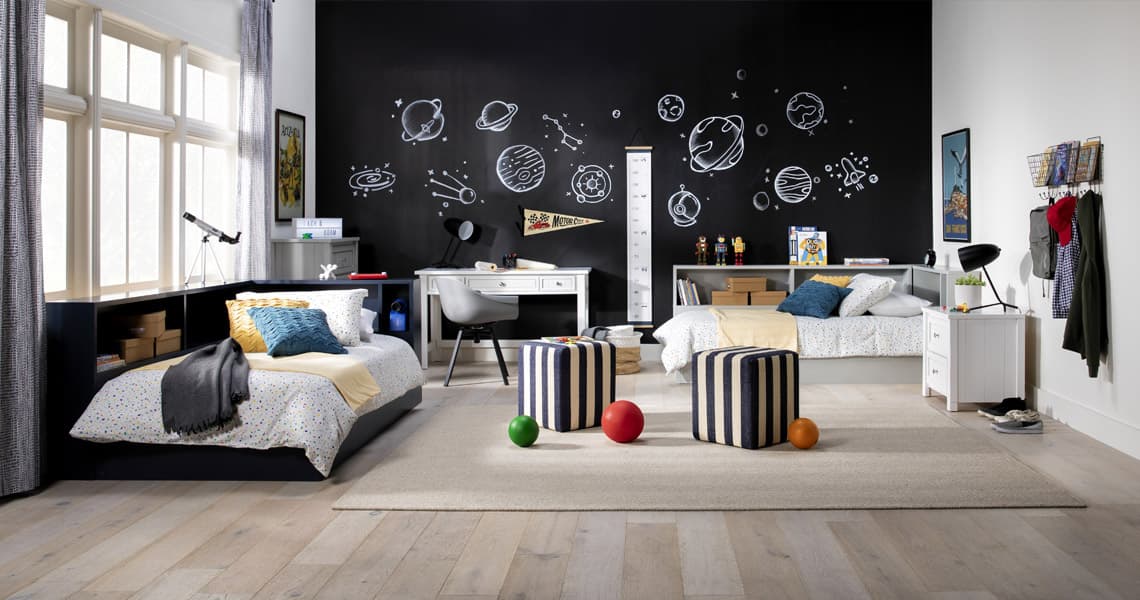
4. Chalkboard Painted Walls
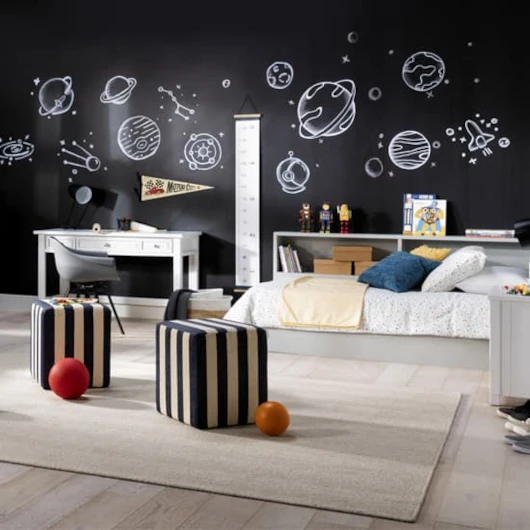
While most parents discourage their children from drawing on the walls, chalkboard paint lets them lean into their natural artistic abilities. This specialized chalk-ready paint can be used across an entire wall, or used with "color blocking" applications – e.g. a square in the middle of a wall – along with a mounted chalk shelf to encourage doodling on the chalkboard wall surface.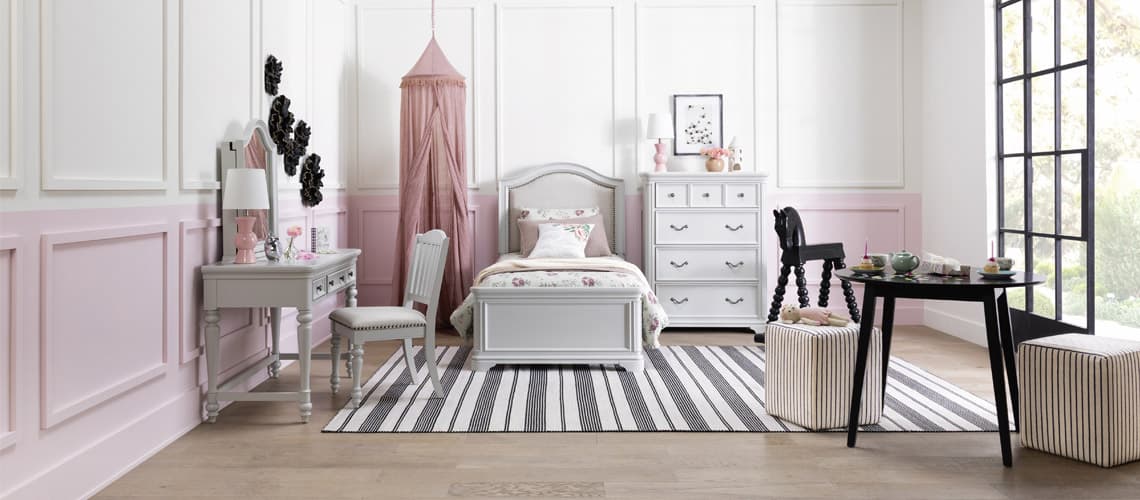
5. Soft Pastel Painted Walls
Not just for little girl's rooms anymore, pastels of every shade soothe and comfort young eyes. Pastels can be used as a soft wash of color behind favorite wall art, or can be incorporated into painted wall murals or vinyl wall decals, if parents are feeling artistic.
6. Grey-Blue Painted Walls
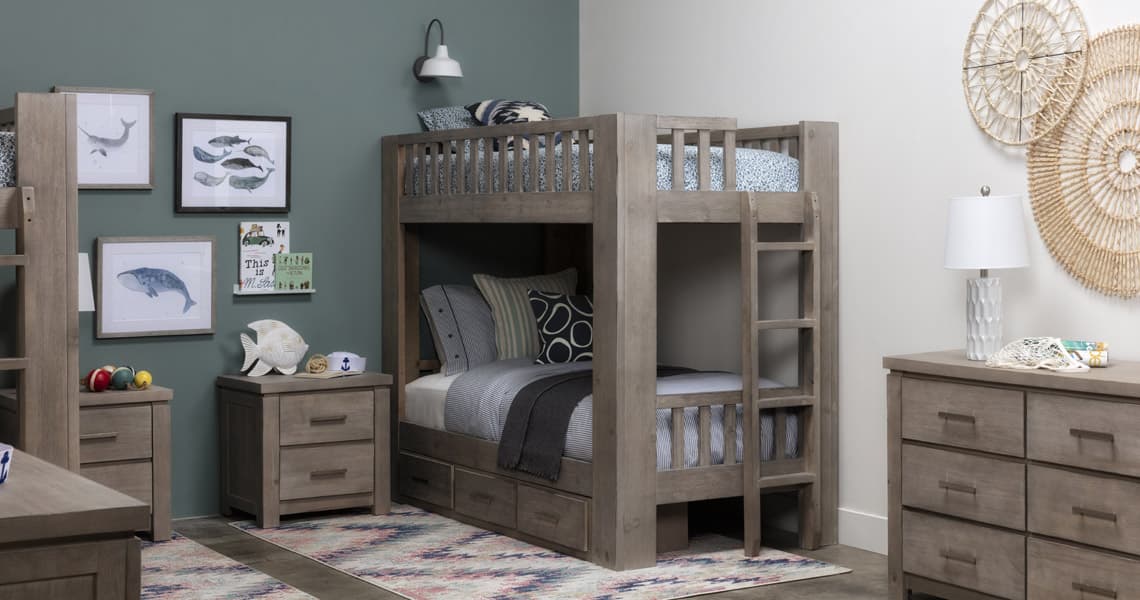
A little bit lighthearted, a little bit dignified, a grey-blue color is light enough to work well for a child's room while not remaining so youthful that it will need to be repainted years later. This beautiful shade works well for both girls and boys, making it a must for a stylish, gender-neutral kids room.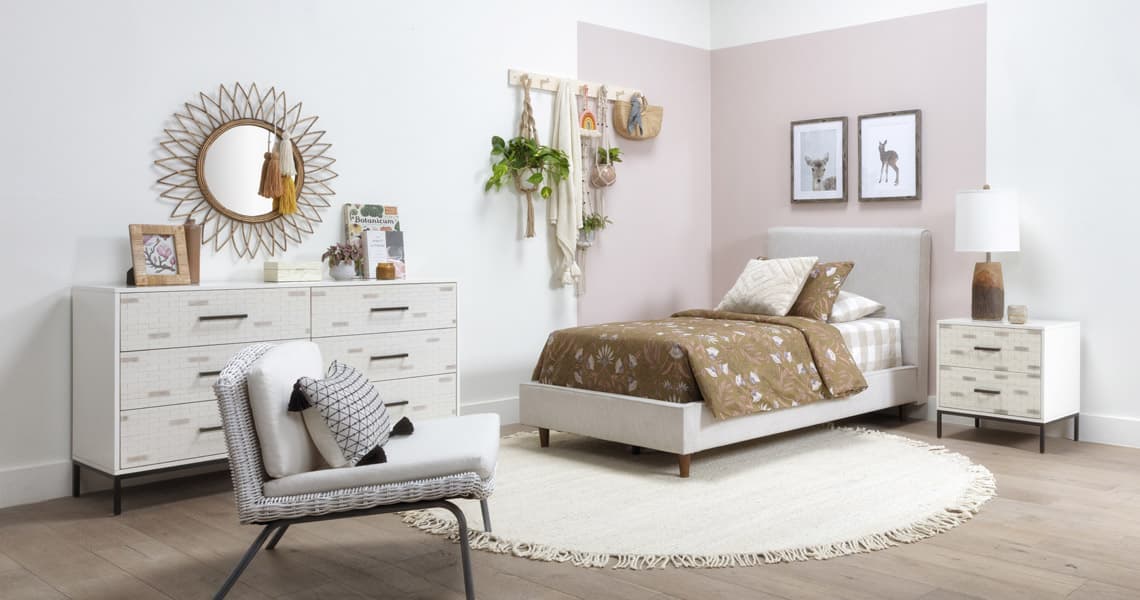
7. Painting a Portion of a Wall
A hot new trend, painting a corner or mid-wall square on a neutral background can help block out specific areas of a child's room, such as the "study area" where their desk is kept, or an "art area" where they'll work with paints or crayons. An excellent decor choice to delineate a room with larger square footage, this technique makes their room feel inviting and fun.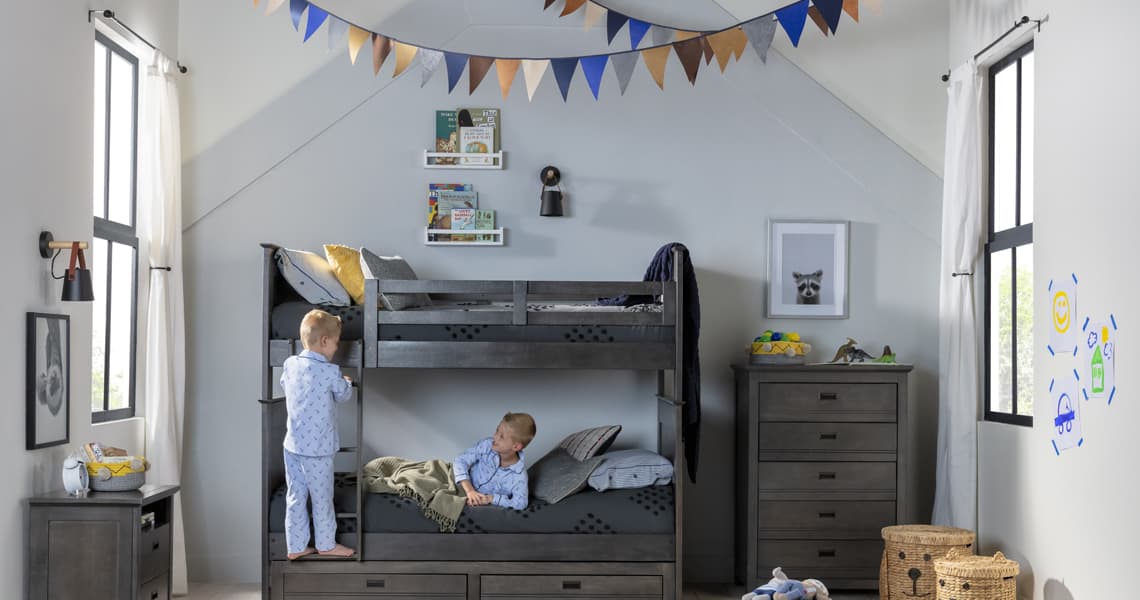
8. Faux-Loft Angle Painted Wall
Even if your child's room isn't a cozy little hiding spot tucked up in a loft or attic, a few angles on a painted wall can make it feel that way. Use a roof-like angled pattern to contrast paint above a focal point, such as a set of bunk beds, to give their bedroom a playful feel that will make bedtime less of a struggle.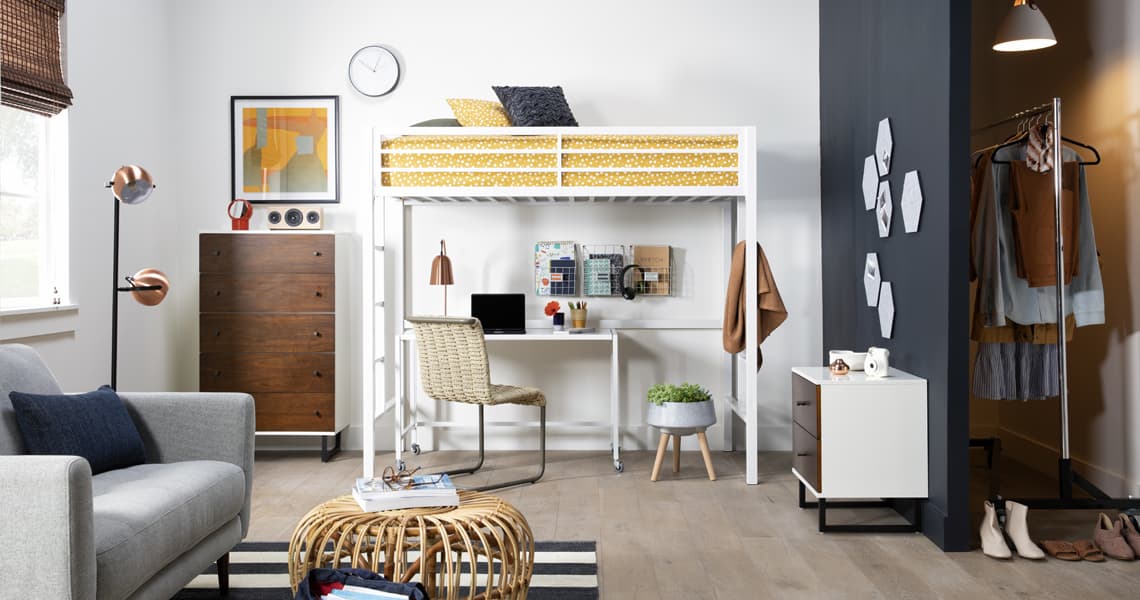
9. Dark Painted Accent Wall
While a dark wash of color may not be expected in a child's room, the grounding, earthy effect of a little jewel tone or dark contrast color will make the room an easy transition as the child grows, or swaps rooms with an older sibling later on. This signature dark accent color will also make accessorizing and decor easy – throw pillows, furniture, rugs, and more are easy to match.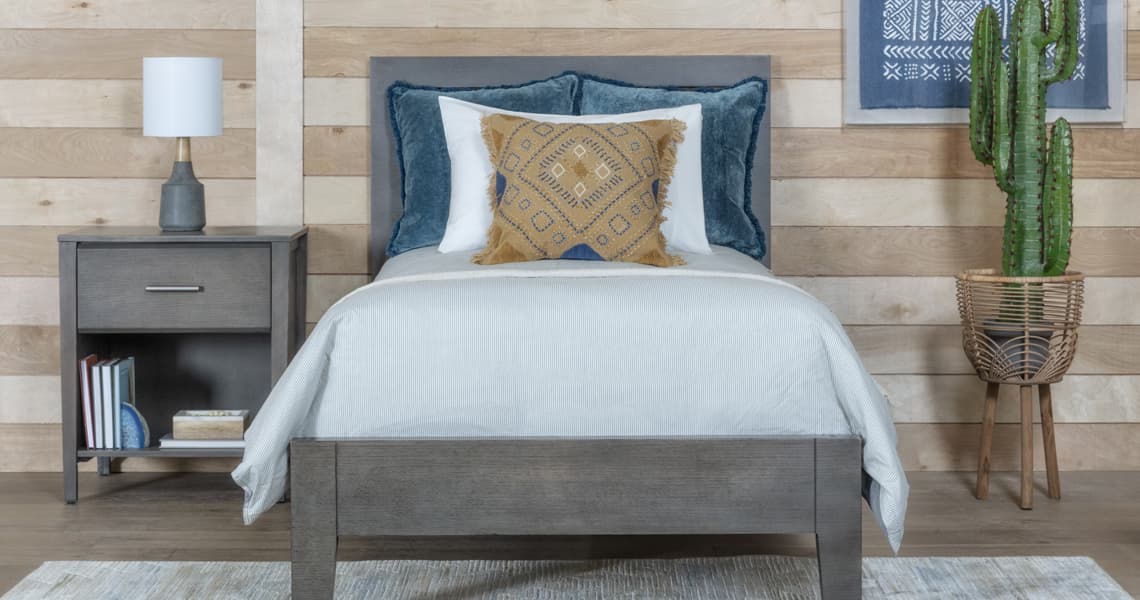
10. Unpainted / Wood Paneling
While obviously not a viable option for every decor-minded parent, allowing the natural beauty of wood paneling to show through can solve the "what color to paint a kids room" dilemma handily. If this choice is available, apply a coat of linseed oil or a beeswax-based polish to bring out the warm glow of the wood.Accents for Kids’ Painted Walls





— More Great Articles —
Read the Latest


Editorial Disclaimer: Articles featuring tips and advice are intended for educational purposes and only as general recommendations. Always practice personal discretion when using and caring for furniture, decor and related items.