What Is an Adirondack Chair? (The History - Plus the Best Adirondack Chairs)
It’s an iconic design: one you’ve probably seen everywhere but never knew what it was called. Here, we’re sharing with you the complete history behind the Adirondack chair, why you’ve probably seen it everywhere and what makes it so great.
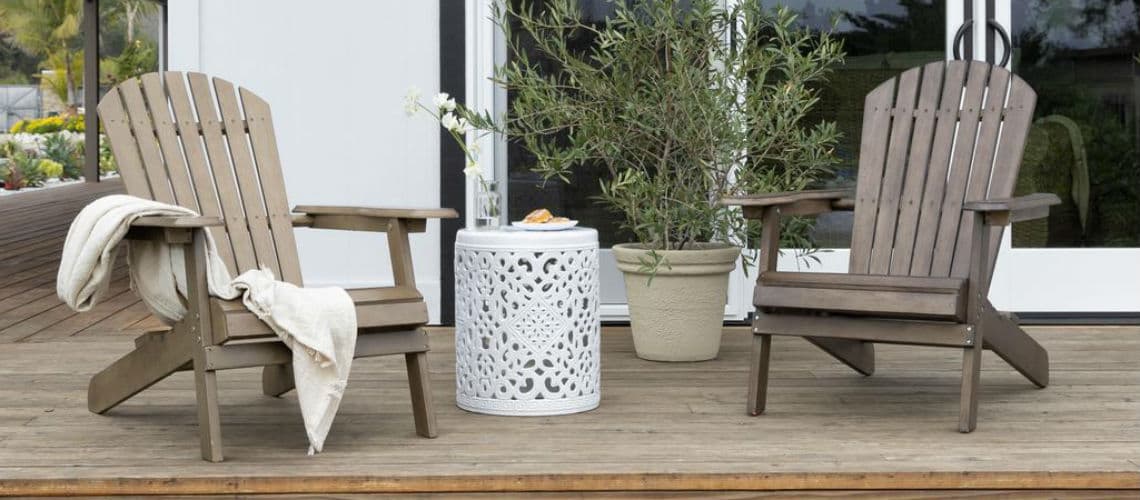
The History of the Adirondack Chair
Let’s talk about Thomas Lee. Ol’ Tommy was born in Massachusetts to a wealthy family – who often vacationed in a town called Westport in New York. The family owned a home on Lake Champlain, in the heart of the Adirondack Mountains. For the Lee family, that little home was a frequent destination for getaways, but our friend Thomas decided that it wasn’t comfortable enough and set out to design ‘the perfect chair’ for outdoor lounging.
Well, try he did, and with each prototype came helpful input from his family members. Three years came and passed, until finally one day he revealed his magnum opus: a low chair with wide armrests, a high back and a slanted seat. In look and feel, the design was exactly what we know today as the Adirondack, except for one difference – the backrest was a solid piece of wood (not slatted). Oh, and he called it a “Westport chair,” not “Adirondack.”
As it so happened, Tommy (that’s Mr. Thomas Lee to you) had a carpenter friend who, as even greater luck would have it, was looking for a new design to sell. Ever the loyal friend, Thomas offered up his design. His friend began making replicas and posting them for sale throughout the community; to say the least, the Westport chair proved quite the hit.
As the story goes, the carpenter friend, whose name was Harry Bunnell, got the patent for the chair. As mentioned before, Thomas Lee was already wealthy; he didn’t need the money, and wanted to help his friend anyway. He smiled favorably upon Harry’s success with the chair.
Harry, meanwhile, got to work. He continued to manufacture and refine the chair’s design for the next several decades of his life. Business was booming – and competitors took notice. Soon, nearby stores were selling similar versions of the chair, with slight tweaks so as to not infringe on the original patent. The demand for the chair grew, and by pure geography alone, it made more sense for the locals to call it the ‘Adirondack’ chair. The name, as you know, stuck.
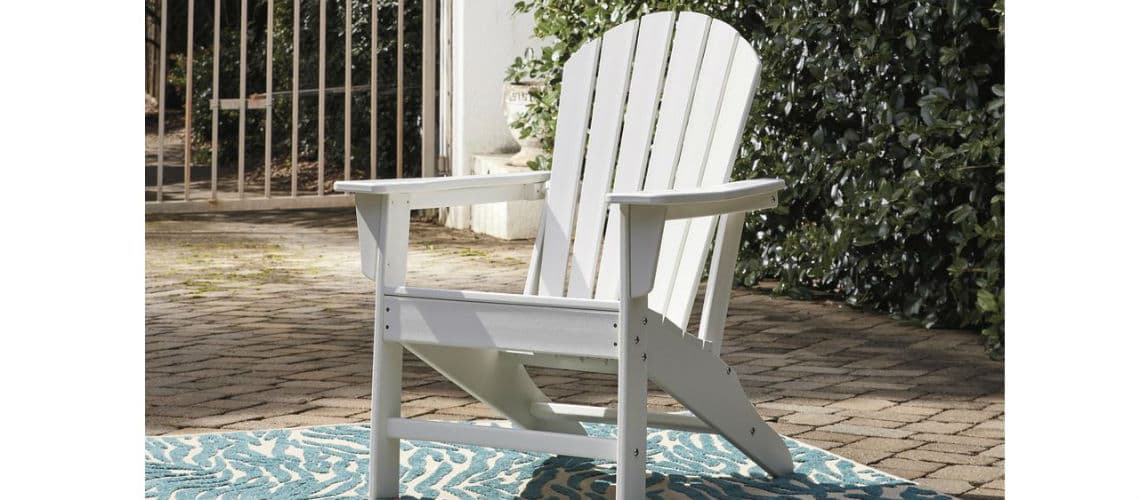
Why Was the Chair So Successful?
The Adirondack mountain range is located in Northern New York. It sees wet winters and can have dry summers. It’s rocky, windy, swampy, marshy and heavily forested. It has a harsh climate; it’s no place for the city slicker’s plastic backyard folding chair.
Instead, it requires something a little more heavy-duty, like solid, weather-resistant wood.
There’s also another consideration to be made. For the most part, it’s safe to say that those who lived in the Adirondacks in the late 19th and early 20th centuries didn’t have day jobs in some shiny high-rise air-conditioned building. Instead, they spent their days working in the rugged terrain – and when they were ready to settle down in the evening, they were ready to settle down in the evening. In contrast to the flat-seated benches and chairs they were used to, the Adirondack chair simply delivered smarter comfort. Its built-in “recliner” (the sloping seat that rose from back to front) was unlike anything anyone had ever seen before, and proved so comfortable, it became a roaring success (see The History of the Adirondack section above). It was serious lounging for serious workers – and a match made in heaven.
It was also practical. Wide armrests proved an easy place to set drinks and things. The arch of the backrest makes it comfortable (ergonomic, even!) on its own, no cushions or head support pillows required. Plus, the material it’s made can be left outdoors for years in a harsh climate with little or no upkeep – and all that will happen is that a natural ‘weathered finish’ will start to form.
With stone benches and small wood table chairs being the only other alternative for lounge outdoor seating, it’s no wonder the Adirondack saw the success it did.
The Adirondack Then and Now
While Thomas Lee was a visionary, his original design has been tweaked here and there through the generations. Here’s a look at how the original “Westport chair” looked in the early 1900s – versus the Adirondack chair we know and love today.
- The Westport was larger. The Westport version was larger in size than what we now know as the Adirondack; Bunnell (the carpenter) is credited with trimming down its size.
- The Westport had a solid wood back. Thomas Lee’s original design employed a panel of solid wood to make up the backrest; today, backrest slat count can range anywhere between five and ten!
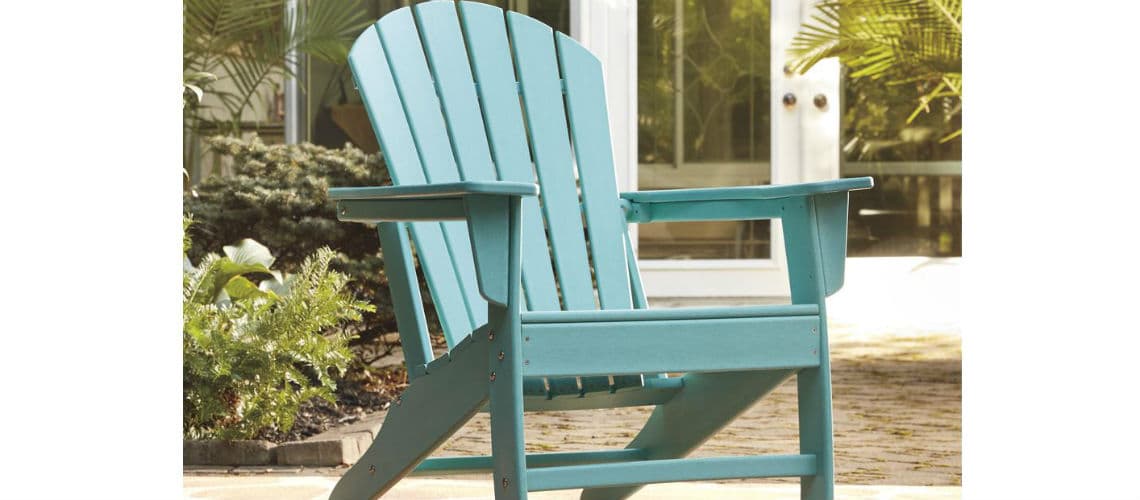
- The Westport was an all-natural color. Although it may not have been the designer’s intention, the natural brown wood used for the original blended in beautifully with the scenery of the Adirondack mountains – and even wore well through time. While natural wood variations can still be found today, it is not uncommon to see Adirondack chairs in bright coats of paint – like red, blue, green and yellow!
Why Choose an Adirondack Chair
There’s a whole lot to love! Let’s break it down, shall we?
- It’s comfortable. The sloped backrest is unique and makes daytime napping a breeze. It’s like a “permanent recliner!” Thanks to a smart design and supportive back rest, Adirondack chairs are the most comfortable types of outdoor seats you will find.
- It’s ergonomic. The design of the chair keeps your feet elevated and your back flat – two things needed for improved blood circulation and muscle pressure relief.
- It’s heavy. Of course, there are lighter options out there; but in general, Adirondacks are known for their quality wood construction, equating to heaviness and durability.
- It’s versatile. One thing you won’t have to worry about when purchasing this chair is whether or not it will fade out of fashion; the Adirondack isn’t limited to any one style. Rather, it goes with all the styles! It’s always been in – and there’s no reason to think it’s fading out anytime soon.
- It’s aesthetic. If we’re judging off appearances alone, this is one chic chair. Its natural hue is earthy and a touch rustic-chic; and its back slats give it a fun curb appeal. Best for the trendsetter in outdoor furniture styles!
- It’s iconic. If you want something more than a chair; if you want a piece of design history; if you want class, leisure and American iconography; if you want any one or all of those things, you want the Adirondack chair!
Where to Place an Adirondack Chair
If you’re considering an Adirondack chair, check out these styling suggestions:
- The front porch. Place seating on your front porch for an al fresco good time. Place two if you like company; one if you can’t be bothered!
- The back patio. Good seating is a great thing for a back patio; if you haven’t tried it yet, we can’t suggest it enough. One or two chairs is all you’ll need; all the rest (fresh air, natural scenery and peaceful nights of good conversation) comes free of charge!
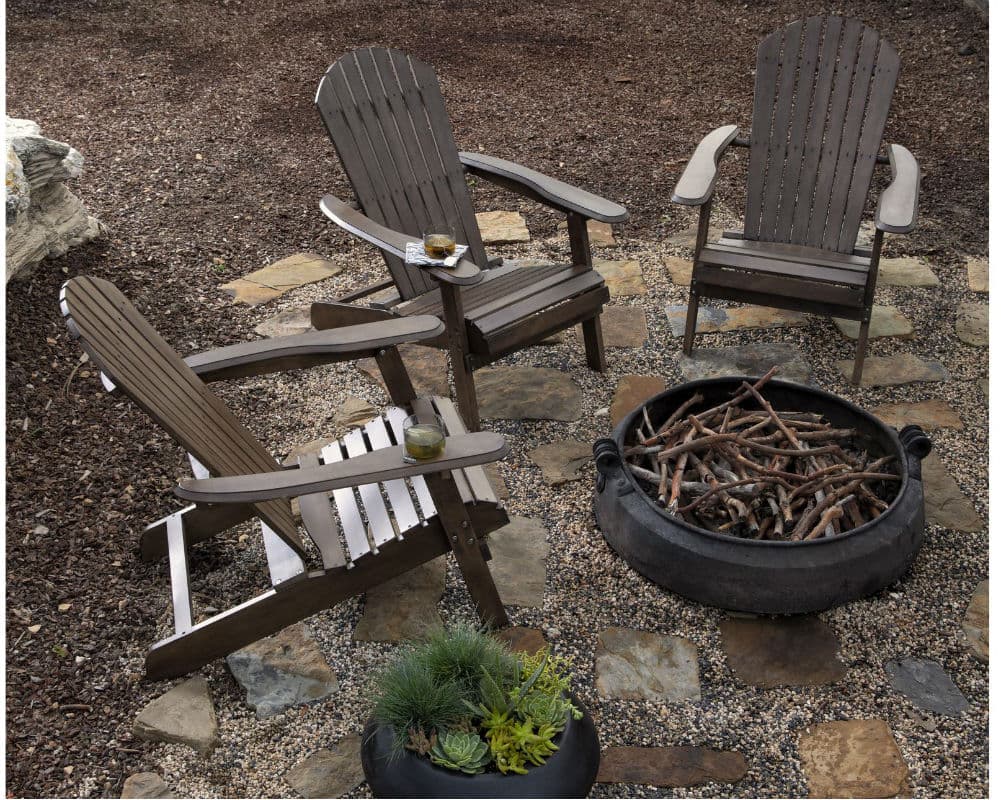
- Around a fire pit. When people are comfortable, they’re happy. When people are happy, they’re comfortable. Comfort = happiness, happiness = comfort, and everything in the last two sentences = Adirondack chairs. That’s why you’ll need them around a fire pit! (Because happy, comfortable people eating s’mores is a beautiful thing.)
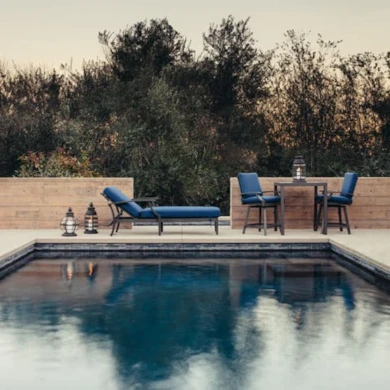
- Around a pool. What’s better than flipping through the pages of your favorite magazine poolside? Doing so on an Adirondack chair. (If you’ve got little kids, you may find yourself begging them to go out for a swim – just as an excuse to watch them from your comfy Adirondack!)
- On a lawn. No pool, no patio, no fire pit? No problem; this is one versatile chair! all you need is ground really; place an Adirondack on it, and what was once empty space becomes a relaxation retreat.
- In a garage. If you’ve got a “man cave” or a “she shed,” make the Adirondack your friend. It’s supportive and comfortable enough to lounge in for the whole weekend – plus, it’s got wide armrests for your beverage of choice.
- On the sand. With the popularity of Adirondacks today, it should come as no surprise that portable varieties are available – we highly recommend them for beach-lounging! Perfect for a day on the beach, river, lake – or park pond.
Other Famous Chairs
The Adirondack may be iconic – but it’s not the only one. Here are a few honorary mentions:
- The Ming Chair. In what is one of the first of its kind to use joinery, the Ming Chair presents an intricate, carved-wood silhouette emblematic of the Ming dynasty.
- The Panton Chair. This chair is a thrill. Its futuristic-looking silhouette (essentially a warped “s” shape) is made entirely of molded plastic.
- The Yoruba Chair. This stunning design was conceived in Western Africa and deserves every ounce of fame it’s ever received and ever will receive: It’s an armchair covered in tens of thousands of small, bright beads, each applied to the chair by hand.
- The Monobloc. The ‘Monobloc’ is a blanket term for those low-cost white plastic “stacking” chairs. We know with 100% certainty you’ve seen them before: Whether in classrooms, in kitchens or on the patio, they’re a staple – you truly can’t escape them!
Best Adirondack Chairs
Here are the best Adirondack chairs for outdoors, chosen for their comfort, high resistance to weather and sleek style.


Best Adirondack Chairs of the Year

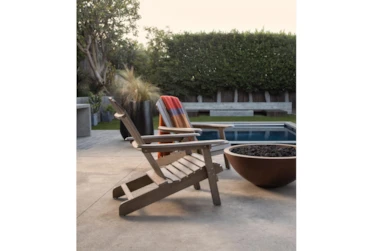


Brown Resin Outdoor Adirondack Chair with Arms
$295
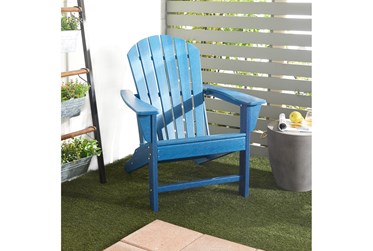
Blue Resin Outdoor Adirondack Chair with Arms
$295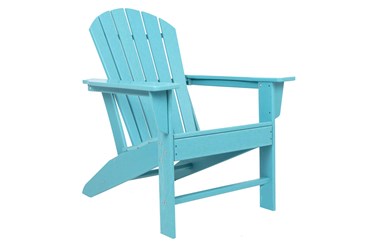

Teal Resin Outdoor Adirondack Chair with Arms
$295

Read the Latest


Editorial Disclaimer: Articles featuring tips and advice are intended for educational purposes and only as general recommendations. Always practice personal discretion when using and caring for furniture, decor and related items.