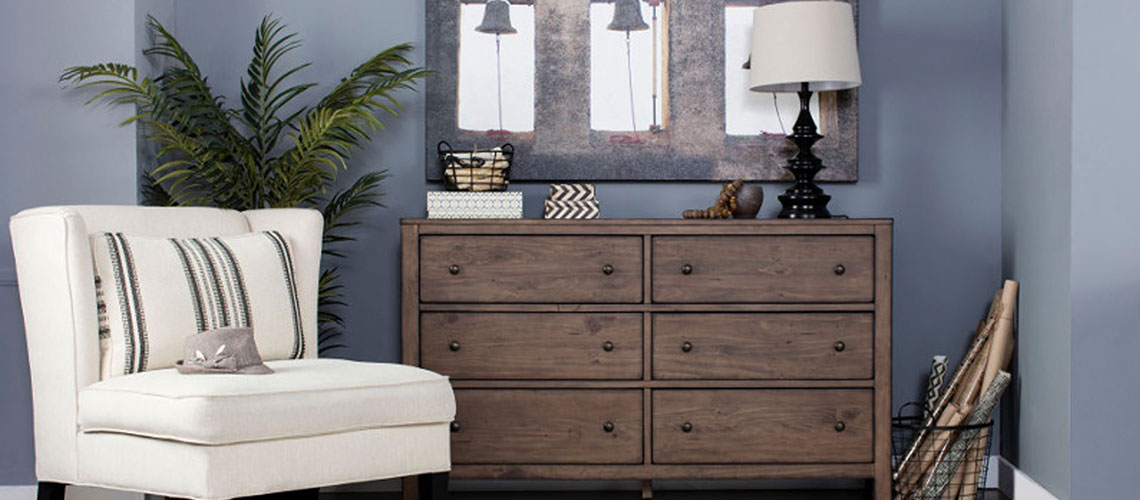
How to Remove Drawers
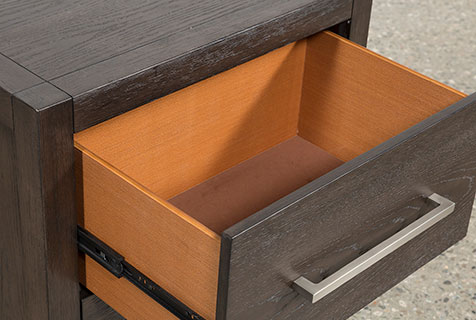
Metal Glide with Lever
Most furnishings come equipped with metal glide drawers, and luckily it’s pretty simple to remove them. First, always make sure you remove the top drawer first—no matter what kind of drawers you have—so your nightstand or chest of drawers doesn’t tip over due to being top heavy. Position yourself in front of the furniture before sliding the drawer out as far as possible.
Feel around for the track levers, which you’ll find in the middle of each track on both sides. Then press both levers down at the same time while you pull the drawer toward yourself. It should lift out quite easily.
Wood Glide Slides
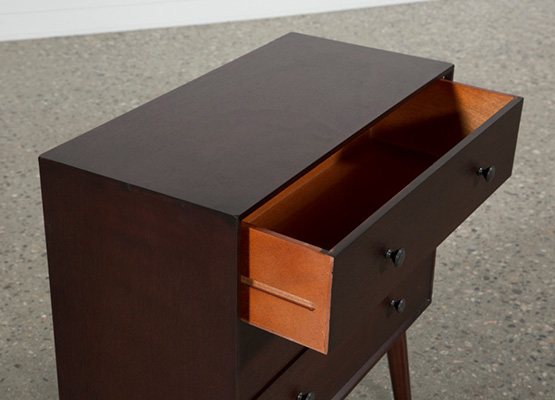
If you have older wood furniture, you might find wood glide slides on the drawers. These don’t tend to have levers you can push, but all it takes to open them is a good pull.
Basically, just pull the drawer of your nightstand or dresser out as far as possible, and then once it stops, be prepared to pull with a little force using both hands. The drawer should pop out after a quick tug.

Stabilizer Screws
If your drawers have stabilizer screws, it will take a few more minutes to remove them, but it will still be pretty easy. Just as with the other types of drawers, stand in front of your dresser, chest of drawers or nightstand and pull the drawer with one hand on each side. Keep pulling until the drawer is fully extended.
Once you can’t pull the drawer out anymore, feel around for stabilizer screws on the inside of the drawer. When you find them, use a screwdriver to remove them, and then locate the catch tabs on each side of the drawer. Release them while you pull up on the catch tab devices, since this will release the drawer from the tracks. You should be able to pull it out straight toward you.
Featured Products










— More Great Articles —
Related Categories
Read the Latest


Editorial Disclaimer: Articles featuring tips and advice are intended for educational purposes and only as general recommendations. Always practice personal discretion when using and caring for furniture, decor and related items.