How to Organize File Cabinets
1. Decide on a Cabinet Size
Take a moment to think about how much paperwork you really work with regularly. Chances are, most of the documents shelved in your drawers and folders are things you feel like you need, or seem important, but really belong in the circular filing cabinet. Once you’ve eyeballed the actual amount of paperwork you need to keep, invest in a cabinet that makes sense for its size.Of course, narrowing down your “real” file needs isn’t always as simple as it sounds. If you’re like most people, many of the files you’ve been “hoarding” are items you “may or may not” need to reference one day, and you’re keeping them just in case.
If that’s the case, then, for purposes of a streamlined file system, you may want to consider two separate units: one for your day-to-days and the other for quarterly or yearly references.
Even if you already own a cabinet, this step is an important one to take before you start the process of actually reorganizing the papers within your cabinet. Later on in the process, after you’ve set aside the folders and files you want to keep and created a system for organizing them, you’ll be happy to have a perfectly-sized filing unit ready and waiting to be filled.
2. Decide on a Cabinet Style
You can skip this step if “style” isn’t really your thing. However, we strongly suggest you don’t. Here’s why.The aesthetics of things we choose to surround ourselves with on a day-to-day basis — even, and especially, things as simple as hair brushes, coffee mugs and, yes, filing cabinets — can affect our energy, moods and productivity. Whether subconsciously or not, most of us are more likely to reach for an object — and more importantly, to want to reach for it — when it’s aesthetically appealing.
This theory is highly applicable to the home office and can have innumerable benefits. From filing cabinets to pencil holders to the very desk itself, it’s as simple as this: The more pleasing to your eye the “boring” things that you need but don’t necessarily want to use on a day-to-day-basis, the easier it is to “trick” your mind into using them and incorporating them into your day-to-day habits.
The point: If the reason why you’re organizing is to help elevate productivity, then taking the extra step to choose a filing cabinet design you love is just as important as the organization itself!
3. Apply the KonMari Method
Now it’s time for the meat-and-potatoes of file-cabinet organizing: Discard what you don’t need. In essence, we’re simmering down the Konmari method (an organization process made famous by Marie Kondo of ‘Tidying Up’ in which “hoarders” are encouraged to let go of anything that doesn’t answer ‘yes’ to the question ‘does this spark joy?’) into one simple step. The caveat? We’re changing the question from does this spark joy? to one that makes a little more sense for file-cabinet paperwork: Is this essential?If you’re working with an old cabinet that’s housing years or even decades of files, then be prepared: This process will take time. Know in advance that there’s no quick-fix for file organizing; you’re going to have to dedicate some time and effort.
As you begin to sift through, separate your files into three piles: Ongoing Need, May Need Someday and Discard. Try your best to limit your May Need Someday pile; be honest with yourself and aware enough to resist keeping the things you want but deep down know you’ll never truly need in the future.
You can read more about the KonMari method here.
4. Divide & Conquer
Now, within the two piles you’re keeping, organize by purpose/topic. Creating subcategories (we recommend “purpose/topic” since it’s often the easiest to identify at a glance when sifting through large sums of papers) will help you to establish the framework for the actual file system later on.Once you’ve got the high-level subcategories hammered down, create sub-sub categories: by dates, names or document type.
Create temporary markers or placeholders to signify where one category starts and the next begins; this will help expedite the process of sifting. Instead of placing each document one-by-one into your filing cabinet, you’ll be able to haul whole piles at once — saving you time and effort.
Remember, though, not to get too specific. You’ll want to keep things easy: easy to reach and easy to identify. A complicated system with too many sub-categories may feel “organized” in theory, but when it comes down to practical everyday value, is a fast pass to chaos.
Finding the sweet spot between “too vague” and “too specific” is the trick to this whole thing. You may find it takes a bit of a learning curve to get there.
5. Organize What’s Left
Once you’ve cracked down on the essentials, you may find the loose odds and ends that don’t really belong in any of the categories you’ve created. Don’t let these tricksters “bog” you down; create a separate category just for them. You can even have fun with them and label their folder something silly like “Tricksters” or a confused emoji. (If you don’t have enough of these “odds-and-ends” papers to warrant devoting an entire category to them, you can even consider skipping the category altogether and simply place the few in the back of the filing cabinet, folderless.)6. Shred What You Don’t Need
Now for the fun part! Take the Discard pile from Step 3 and shred it! This step shouldn’t be forgotten if you are working with documents containing sensitive information. If you are working with actual work papers (from your place of work), forgetting to shred can even be deemed illegal. If you’re working from home and deal regularly with sensitive documents, you may even want to consider investing in a heavy-duty, industrial-strength office shredder.7. Make It Aesthetically Pleasing
Now, you’ll need actual dividers/folders. While you can totally go the Manila folder route, remember that this is a chance to let a little bit of your style peek through! (Need convincing? We refer you to Step Two.) With the rise in popularity of work-from-home jobs, and with the rise in demand for home office style, bolder, prettier office essentials — file folders included — are easier to come by than ever before. From colors to patterns to shapes, your options for “file cabinet folders” that fit your style personality are just about endless!8. Decide Which Components You’ll Need
Contrary to common conception, a filing cabinet is more than just a drawer + folders. Depending on your file situation, you may need to incorporate a few extra elements, such as:- Sticker labels: A quick way to create labels for your folders is through a sticker label-maker. Easy-to-read font means easy-access to all files.
- Hanging folders: The type of folder you’ll need will depend on the type of filing cabinet you have. Open the drawer of the cabinet: If it’s wide enough and allows for the side of a folder to hang on each end, you’re dealing with a lateral or vertical cabinet — the most popular of filing cabinet varieties. These units are designed for the placement of hanging folders, which you’ll need to purchase if you don’t own already.
- Sub folders: The great thing about filing cabinets is that they make it easy to gauge an organizational structure as a whole from just one glance — but this wouldn’t be possible without sub-category (or “graduated”) folders. Folders, in other words, with tabs at different points; when placed inside a cabinet, the different tabs peeking out at the top will make it easy to identify which paperwork a given folder is associated with.
- Heavy-duty plastic folders: For extra-important documents, you may want to consider folder protectors, or plastic sheets designed to fit over a set of papers. While file cabinets are “protective” by themselves, a heavy-duty plastic folder will help ensure sensitive documents don’t ever get bent, crinkled or dirtied with daily use of the file cabinet.
- A “sister” unit: We get it; life happens, and sometimes one filing cabinet simply isn’t enough to hold every piece of truly important paperwork. In that case, there’s no shame in a second filing cabinet; in fact, two cabinets (one on either side of a desk) can make the overall design of a home office feel more “complete” than one alone!
9. Color Code
When picking out folders for your filing cabinet, consider different colors for different categories. “Work” documents, for example, can be coded by shades of blue — while personal or family documents can be identified by green. (This color-coding technique can be used in place of or along with sticker labels.) Remember, though, that the “top” tab of the folder is the only part that will be visible to you once the folder is placed in the file cabinet; it will be of no help at all if the folder is its own distinct color code — but the tab is the same color as the rest!
10. Place Your File Cabinet Within Easy Reach
Once you’ve filled out your filing cabinet with the files you need in the order you need them, it’s time to arrange the actual cabinet in a practical spot (read: one that’s easy to reach).
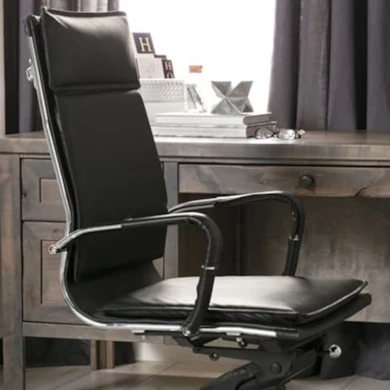
If you have the space, placing a filing cabinet under your desk is a common, easy-reach arrangement. If the space under your desk is tight, you might consider placing the cabinet to the side of your desk or workstation; with a swivel desk chair, turning around to reach for it will be a breeze!
11. Exhale & Enjoy Your New System!
This step needs no explanation. Happy WFH-ing!
Why Get a File Cabinet for Home?
You may think you’ve got a good system with stacks of papers scattered all around your desk, but trust us: Once you go “file cabinet,” you’ll never want to go back to the old way of doing things. If you’re after time-saving, productivity and a less-stressed home office environment, then the folder organization system can truly be life-changing.
Whether you’re dealing with stacks of old school, work, medical, legal or “other” papers, the time has come: You need a home filing cabinet. The good news? A “home filing cabinet” doesn’t have to be as ugly as the ones from the corporate office. And not only does it not have to be as ugly — it can also stun. Yes, a filing cabinet can be just as chic as the rest of the furniture in your home!
File cabinets are often thought of as those industrial-grade units made of sheet metal and often with a boring grey or taupe finish. Decades ago, those probably would have been your only options, but now, with the increase in demand for work-from-home jobs, availability of “filing cabinets for the home” is on the rise, and the styles and designs for filing cabinets are endless.
One of the most popular reasons for choosing a home filing cabinet is that it simply looks better than its industrial-grade counterpart. It’s warmer, more inviting and a tad cozier — and makes working from home all the more bearable.
As a storage unit, a home file cabinet is also practical. It offers a sleeker, more efficient way to store papers than simply “shoving them into a desk or bookcase.” It also makes accessing old files a breeze — saving you time in the long run.
File Cabinets That Look Like Furniture
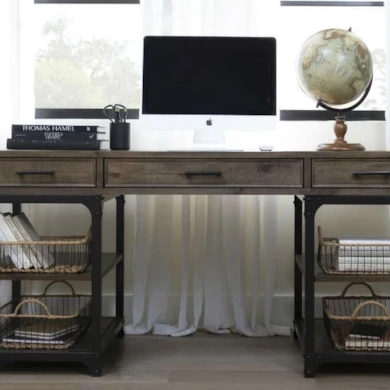
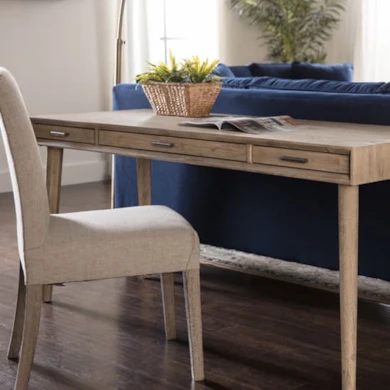
In the home, a filing cabinet doesn’t have to look like a filing cabinet; it can look as stylish and curated as the best of your furniture pieces. The trick to this is to find one designed for the home; one with a rich, warm, wood finish that contrasts sharply with the “cold, sheet metal filing cabinets” synonymous with the corporate environment. But bringing the look home isn’t just about the file cabinet style itself; it’s also about what it’s saving you — time, effort and clutter. A stylish design with spacious, easy-access drawers and folder categorization. What more could you want in home furniture?
Filing Cabinet Ideas
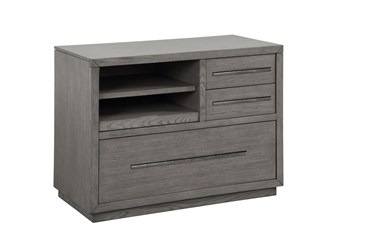
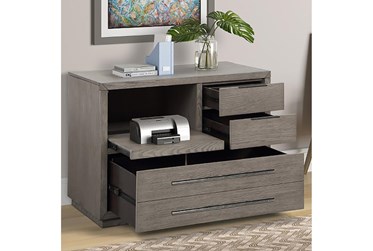
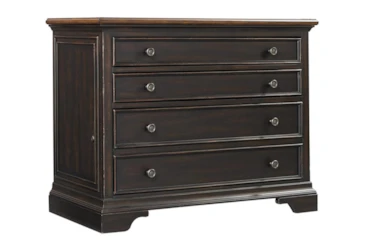


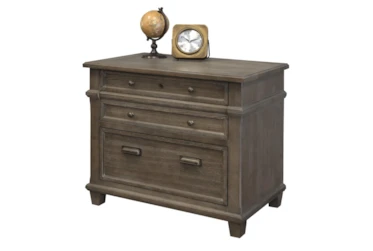

— More Great Articles —
Start a Home Filing System
Read the Latest


Editorial Disclaimer: Articles featuring tips and advice are intended for educational purposes and only as general recommendations. Always practice personal discretion when using and caring for furniture, decor and related items.