How Tos
How to Hang Wall Art
The hunting’s done – you’ve found the perfect painting or photograph to complete your home, and now all there’s left to do is display it. Here, we show you how to hang wall art with six simple tips.
1. Hang at Eye Level
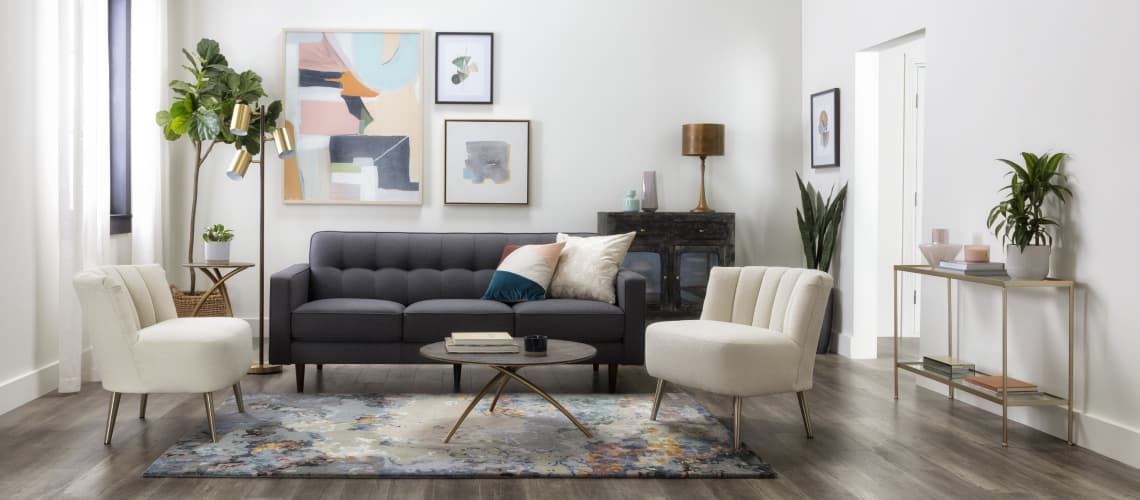
Nothing’s worse than that feeling you get when you’ve drilled a hole into your wall and placed your piece – just to realize there’s something “off” about the placement. This happens a lot in homes, concerning wall art (when it just doesn’t seem right somehow, as though it’s not crooked but not quite centered, either). The biggest culprit is also the easiest to fix: art hung too high. Whether you’re hanging a painting, framed portrait or other art piece, the center of the piece should be no lower and no higher than about 58”. (58” is where most eyes tend to naturally fall when gazing across a room.)
2. Follow Wall Edges
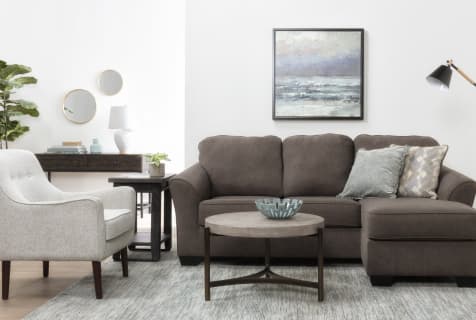
Most walls aren’t perfectly square, as most rooms aren’t perfectly defined by straight lines. Take into consideration where walls get interrupted by doorways and ceiling structures, and arrange a gallery that works its way through your room’s unique layout.





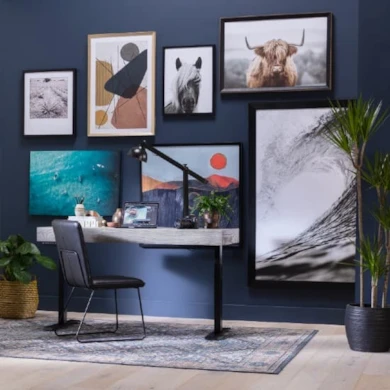
3. Balance With the Furniture
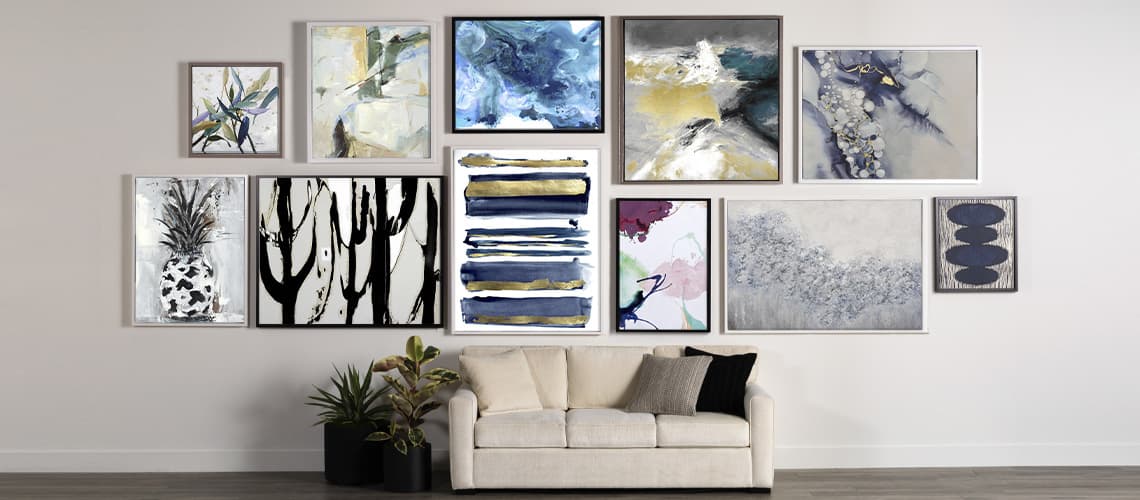
Look at your wall art as part of the bigger room – and use it as a response to larger furniture items within the room. For example, a sofa or table on one side of the room would feel lopsided without a statement piece above it; hang up a large canvas art piece proportionate to the size of the furniture to restore balance.
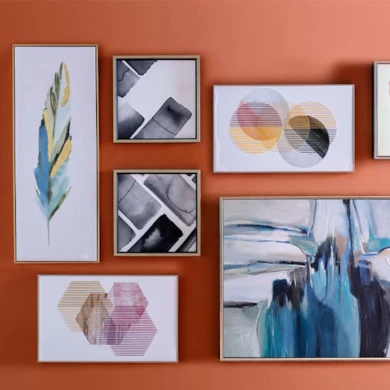
4. Mix Up the Sizes
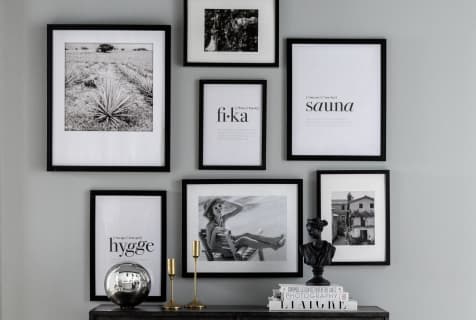
Eating the same chicken sandwich every day for breakfast, lunch and dinner gets really boring. In the same way, a gallery where every picture is the same size offers nothing in the way creativity – but mixing things up makes the focus easier on the eyes.
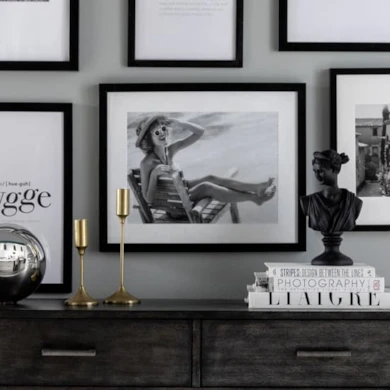
5. Consider Frames
Most wall art comes canvas-style, which means you have to frame yourself (if you want that look). Framing is a tool meant to define and especially helpful in a gallery of multiple pieces.
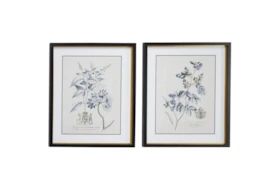

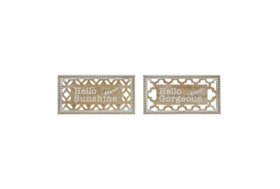

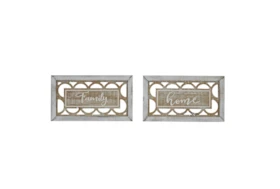
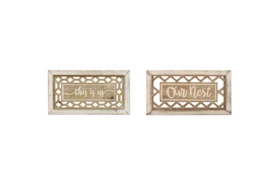





6. Center Your Space
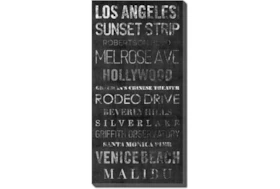
While decorating a large wall or an empty room can seem foreboding, remember the wise proverb: “a journey of a thousand miles begins with a single step.” As with any project, you won’t get anywhere without making a first move, so with wall art, don’t be afraid to just start somewhere and let the rest of your décor and furniture naturally follow. In the image here, note how the wall art piece centers the entire space – a single ‘first step’ in the varied puzzle that is home décor.





— More Great Articles —
Wall Art for Hanging
Read the Latest


Editorial Disclaimer: Articles featuring tips and advice are intended for educational purposes and only as general recommendations. Always practice personal discretion when using and caring for furniture, decor and related items.