Decor Tips
Dark Living Room Ideas
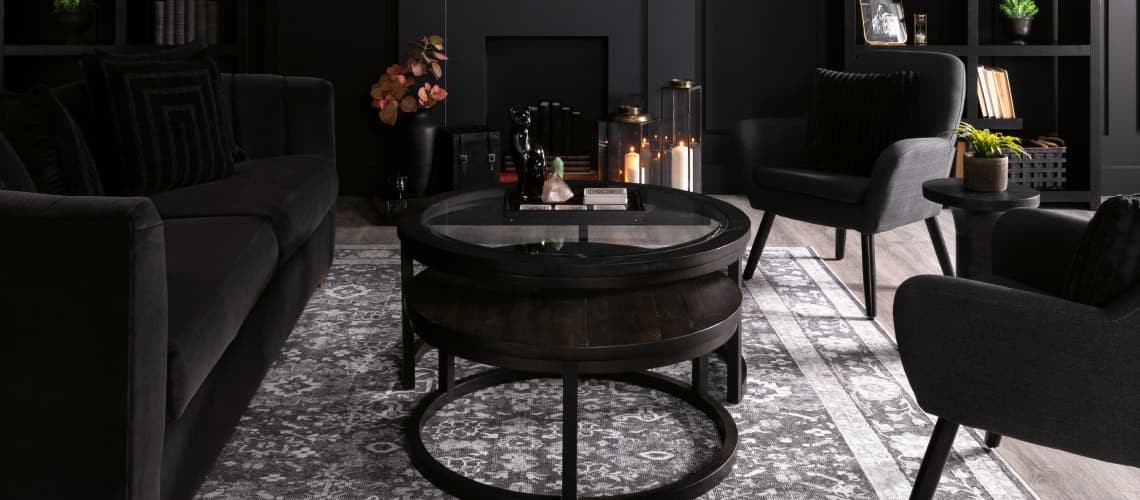
Colors emit color associations: yellow is happy, blue is peaceful, green is natural and red is passionate. These are the colors that are often talked about in conversations around the psychology of interior décor palettes and how to choose an aesthetic that works for your personality. Less talked about – but just as important – are darker colors; brown, black and charcoal can make a room feel deeper, heavier and more focused. If you’re teetering on the line between light and dark, let us present to you the following five dark living room ideas to sway your perspective.

1. Black Sofa + Gold Table
In the art movement known as Cubism, story lives in negative space. In prose poetry, meaning is inferred between the lines. And in modern décor, beauty is revealed in contrast. Create a color palette that reflects back onto itself with juxtaposition: gold, silver or white with black, brown or grey. It’s the pairing that works, as each color separated delivers only a glimpse of what it could be in relation to the other.

2. Stamped-Out Superfluity
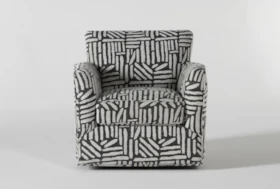
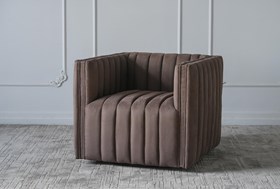
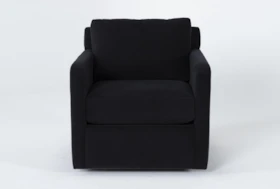
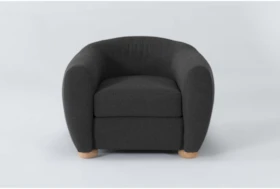
A black pillow on a black accent chair breaks all kinds of rules: namely, the contrast one we just went over in step 1. But in some cases, lack of contrast creates just as much depth – especially when texture has entered the chat. Keeping the colors the same and the materials different will ignite awareness of sensuality: velvet on fabric, fabric on metal, chenille on leather and all other combinations gets the brain imagining the tangibility of said combinations. So much as seeing a good texture combination works not just the visual aspect of interior design but also the feeling aspect. When you get to wondering what certain textures would feel like on your skin, furniture and décor becomes intriguing and desirable.







3. Background Programs
Think of your living room as a production: there’s the main star and supporting roles – and essential for highlighting these players are the backdrop, hair-and-makeup and costumes. In a living room, the main star is the sofa and the supporting roles are the chair, tables and bookcases. Essential for highlighting these players are the backdrop (the curtains), the hair-and-makeup (throws and accents) and costumes (upholstery). In the living room shown here, the curtain backdrop sets the stage for dark accents scattered throughout: see the dark pillow, side table, coffee table and console table. While the main star is lighter in color, it’s the dark notes that bring out the character and set the scene for a moodier undercurrent.

4. Shape of Darkness
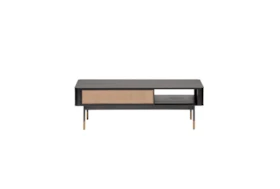
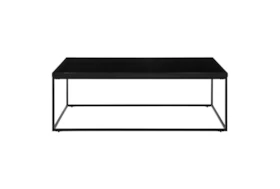
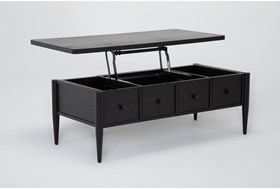
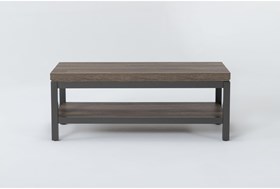
Just as your eyes will adjust when you’re in a dark basement, cellar or attic for a while, staring at dark pieces of art or décor can make you see more of the beauty within the shade than meets the eye. Darkness is tantalizing; in interior design it lures you in because it is so often exiled. Fresh, light and airy seem to be the M.O. of designers right now – perhaps due to how nicely fresh, light and airy look on an Instagram feed. But when styled right, in modern shapes like the coffee tables shown here, darkness stands as a heavy and fortitudinous rebuttal.

5. Hello Darkness, My Old Trend
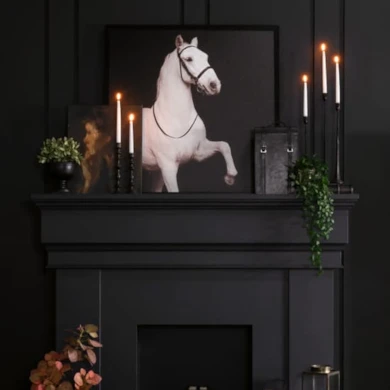
A dark accent wall. Dark wall art. Dark candle holders and dark vases. Dark frames, dark globes, dark books and dark photos. The irony here is that this aesthetic feels almost effervescent. The white horse in the wall art seems almost three-dimensional, and any traces of white jump out more than they every could if styled in a room any less dark.







— More Great Articles —
Read the Latest


Editorial Disclaimer: Articles featuring tips and advice are intended for educational purposes and only as general recommendations. Always practice personal discretion when using and caring for furniture, decor and related items.